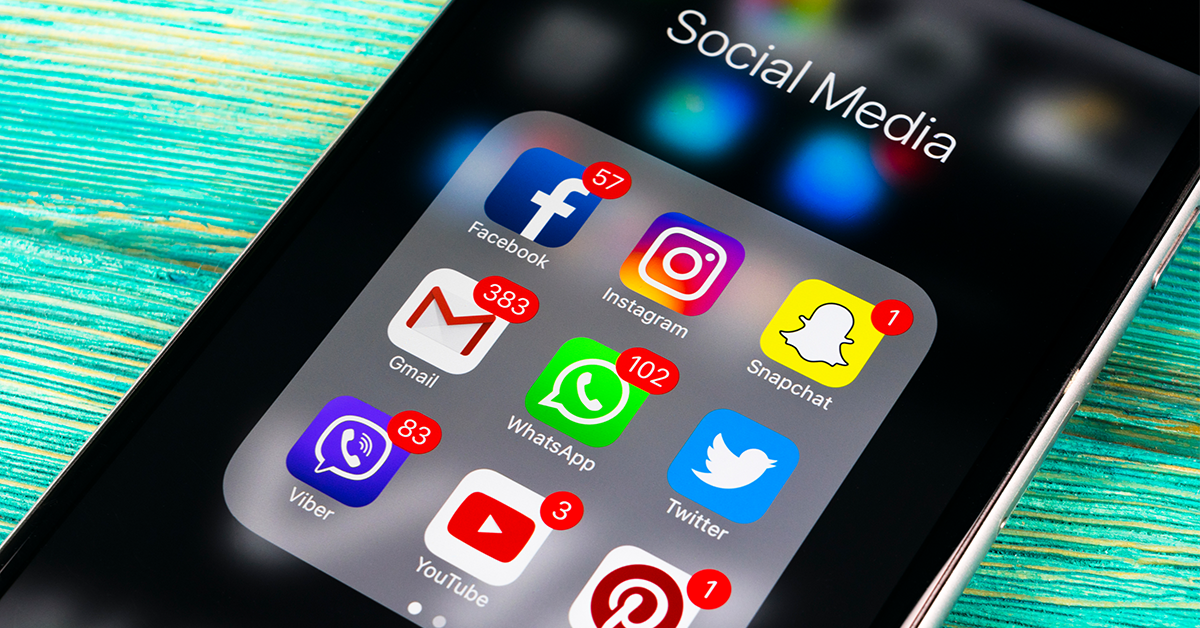
For many parents, raising kids that have a healthy relationship with social media can be a challenge. Why? Because social media is ubiquitous. 4.48 billion people currently use social media worldwide, a number that has more than doubled from 2.07 billion users in 2015. As...


If your behavioral health practice is like most, you have been busier than ever this year. Today’s challenges are manifold: applying and enforcing safety measures, navigating the new world of virtual therapy, and facing a new need for services due to pandemic-related increases in anxiety,...

In the early morning of August 30th, the last plane carrying U.S forces left Kabul International Airport in Afghanistan, bringing an official end to America’s longest war.  For 20 years, American troops fought in the desert of Afghanistan, first searching for 9/11 mastermind Osama Bin Laden,...

September is Suicide Prevention Awareness Month. Why is it so important that we create awareness and take action? Because the data is alarming.  Every day, approximately 130 Americans die by suicide. That is one person every 11 minutes. There is one death by suicide for...

September is recognized as Suicide Prevention Awareness Month-- a time meant to raise awareness and open the dialog around suicide, while advocating for better mental health care. As part of this awareness month, September 5th-11th is recognized as National Suicide Prevention Week, and September 10th...

Part Five in a Series  Within the United States, many mental health and criminal justice experts believe that jails and prisons have become our nation’s largest psychiatric facilities. This may be surprising to someone who does not have frequent contact with the American criminal justice system,...

Every child gets scared or anxious sometimes. It’s normal for kids to be afraid of the dark, shy around new people, or nervous before a big test. It becomes an issue when fear and anxiety cause distress or interfere with everyday activities. Anxiety disorders in...

Do you like listening to podcasts? Mental Health New Radio has a new podcast series called “The Self-Care Chronicle with Dr. Marsha Brown – Mental Wellness for the Mental Health Professionals” that’s absolutely worth a listen for anyone working in the field of behavioral healthcare. Self-Care...

Part Four in a Series An interesting aspect of living in the United States is the incredible variety of religious and cultural traditions practiced by our 328.2 million neighbors. As our country has evolved, distinct customs have developed alongside it, creating new cultural traditions and religious...

As a behavioral healthcare provider, you know all too well that running a successful organization involves much more than providing quality care for your clients. The reality is, you cannot provide effective care if you neglect the operational elements of your business which also require your time...

An unfortunate reality is that many children experience devastating ordeals in their young lives. A close family member commits suicide. Parents get divorced. The child experiences abuse or neglect. These traumatic events are referred to as adverse childhood experiences (ACEs). They are closely linked to...

What is population-based care and why should it matter if you’re a behavioral healthcare provider? In this podcast, "Understanding Population-Based Care", you’ll learn about this emerging healthcare model, how it goes hand-in-hand with value-based payments, and the impact it will have on your practice.  According to...

Children in America face an unprecedented rise in chronic childhood illness, from allergies to autism. The current healthcare system is set up to treat acute diseases, but lacks the capacity for complex cases. In contrast, the whole child approach uses collaborative care, including physical, behavioral,...

First in a  Series Since the beginning of 2020, we’ve seen the unemployment rate reach a staggering 14.8%. The resulting economic strain hasn’t just affected unemployment – it’s crept across almost every facet of our lives, including our access to healthcare. Many of the individuals experiencing...

Since the start of the COVID-19 pandemic, telehealth services have increased significantly. For mental health practitioners, teletherapy has become an essential method for treating patients while keeping all parties safe and healthy. Although the technology was ready and available to easily deliver individual and group...

If you want your organization to thrive in the behavioral healthcare market, you must start thinking about value-based care now. As the focus shifts away from traditional fee-for-service (FFS) systems that pay for the amount of treatment, value-based payments (VBP) are becoming increasingly important to...

COVID restrictions and proximity to care are two reasons why more children with behavioral health needs are seeking telemedicine options for their care. But a virtual visit is very different from an in-person visit, especially for those with autism and ADHD. There are a number...

Making self-care a priority is essential when you work in behavioral healthcare. Day in and day out, you help others navigate challenges in their own lives – which can take a personal toll on you. In addition to the work you do normally, COVID has...

The need for quality behavioral health services has been heightened and highlighted during the COVID pandemic. The value and importance of behavioral health services have become part of the national conversation in recent months. It is clear that a therapists services are an essential part...

Suicide is the tenth leading cause of death in the United States, and the numbers have been increasing over the past few decades. Historically, attempts to predict and prevent suicide were based on self-reporting, which can be problematic because people may hide their suicidal thoughts....

A Home Within was founded in 1994 with a mission to heal the wounds of complex trauma and loss experienced by many foster youth. Local networks of volunteer clinicians provide individual, open-ended, relationship-based psychotherapy for young people who are, or previously were, in foster care....

Rural, isolated regions have historically lacked resources and infrastructure to adequately address the behavioral healthcare needs of its population. People living in remote areas have limited access to specialty services for mental health and substance use disorders, creating a rural-urban divide. Fortunately, technological innovation and...

COVID-19 upended life as we know it. Although some states have eased initial lockdown restrictions, indoor gatherings of unrelated people remain risky, according to the Centers for Disease Control and Prevention (CDC). Some communities continue to prohibit them, and nearly all continue to recommend working...

All behavior is learned and displayed within the contexts of society. Each individual’s culture is a unique blend of ethnicity, demographics, socioeconomic status, language, and affiliations. If practitioners assess and evaluate behavior through a client’s frame of reference, human behavior becomes more evident in light...

There are numerous challenges that come with running a residential behavioral healthcare program. The tangled web of paperwork, accreditation, and compliance standards can be a real headache for those running the facilities. In addition, many administrators see high turnover as unavoidable, and accept claims denials...

The field of behavioral healthcare has changed. 60-65% of human service agencies bound to a fee-for-service model fail. Medicaid margins are razor thin when you consider the exceedingly low payments mental health counselors receive versus the escalating costs of delivering quality care, forcing many direct...

Too often, society treats substance misuse as a criminal or social problem rather than a health condition. Treatment and prevention services are traditionally separated from general healthcare. Such separation leaves limited options for addiction treatment. Failure to adequately address addiction has led to a crisis,...

Behavioral healthcare is changing. Focus is shifting away from traditional fee-for-service (FFS) systems to value-based payments (VBP). These new payment methods link reimbursements with improved performance and outcomes. They are designed to hold providers accountable for the quality of care they provide to their clients....

With the outbreak of Coronavirus, everyday life has become difficult for millions of people across the globe. The disease, also known as COVID-19, is highly infectious and can have varying effects on different people. According to the World Health Organization, the virus primarily spreads through...

The healthcare space is in the process of a challenging transition to value-based care. The expectation that most organizations can make the transition in a year or two is overly optimistic. Complete transformation may take a long journey and will require careful consideration. So far,...

Psychiatric nurse practitioners are instrumental in providing treatment and helping patients cope with psychiatric disorders including ADHD, PTSD, mood disorders, and anxiety, as well as a whole host of other conditions. They work with individuals, families, groups, and communities, assessing their mental health needs before...

Our country faces a crisis. Communities across the nation are stricken with substance abuse and mental illness. Data from the Substance Abuse and Mental Health Services Association (SAMHSA) reveal nearly 58 million Americans have mental illnesses or substance use disorders, with 9 million adults having...